| |
| |
At
the Beginning |
Having
served during WW I in the storied Yankee Division,
Howard D. Johnson returned home to take up his cigar
business where he had left off. However times had
changed and Johnson became deeply indebted. Forced
to |
|
|
 |
|
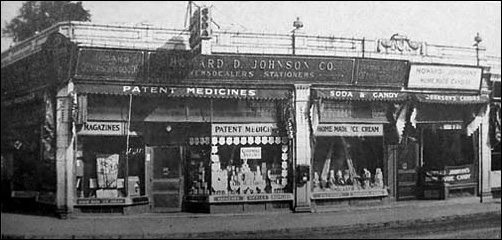
abandon the once lucrative cigar business, he went to
work at the Walker-Barlow Drug Store. The store was
primarily a newsstand and was located in Wollaston,
Massachusetts. Not long after the 27 year old Johnson
started work, the store's owner unexpectedly died. The
proprietor's heirs agreed after some debate to allow
Howard to take over, and to loan him $2,000 to get him
started. In addition, he put up $500 which he had to
scrape together from his mother and sisters. Thus began
the world's greatest hospitality empire in December
of 1925 with its inexperienced owner more than $42,000
in debt! |
|
|
|
|
| |
| Malboro
never opened |
|
-I-495
? |
|
| |
|
|
| |
| Seekonk
(Providence East) |
|
-821
Fall River |
|
| |
|
|
|
|
| rc |
Lodging:
HoJo's highway hotel |
| |
| |
| Superlodge |
| |
| Westborough |
| -5
Turnpike Rd |
|
| |
| |
|
| |
| |
| |
|
|
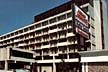
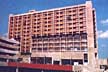
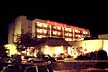
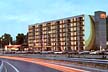
Introduced
in 1983, the Superlodge concept was a late attempt by
the Howard Johnson Company to reinvent its accommodation
offerings. Each Superlodge was to feature between 150
and 250 guest rooms in six story structures. The idea
was to focus on a broader based clientele with a special
emphasis on business customers. Designed for suburban,
urban, and airport locations, planned amenities included
expanded meeting room facilities, room service, cocktail
lounges, restaurants, exercise rooms, and indoor swimming
pools. The First and perhaps only Superlodge was the
unit built in Westborough which was well sited adjacent
to a "technology hub." |
|
| |
|
|
| back
to top |
|
| c |
Commissaries:
production, warehouse, and distribution |
| |
| |
| Boston |
| |
| Brockton |
| |
| Quincy |
| |
| Wollaston |
| |
| |
|
|
|
|
| |
|
|
| |
|
Not
created until late in 1965, the Landmark Supply Division
was a natural outgrowth of the Howard Johnson Company.
Landmark facilitated substantial cost savings, streamlined
procurement of restaurant equipment and motor lodge
furnishings while further establishing standardization
and promoted Howard Johnson's quality image. The division
worked closely with the Company's architecture and design
department to ensure tight integration and enforcement
of Howard Johnson's high standards. After Marriott's
purchase and subsequent breakup of Howard Johnson's,
Landmark became a part of Prime Motor Inns and was relocated
to New Jersey. Landmark was spun off and eventually
had a falling out with HFS/Blackstone/Cendant (Prime's
successor). |
|
| |
|
|
| |
| |
| Vending |
| |
| Automated
Merchandising |
| |
| All
Seasons Vending |
| |
| |
| |
| |
|
|
|
Introduced
in 1966, the Automated Merchandising Division traced
its origins back to at least the early 1950s. The division
oversaw vending services. Most of its vending machines
were placed in high volume Motor Lodges and at highway
service plazas. Howard Johnson's expanded its vending
operations by purchasing several vending companies throughout
the United States. Later the division was renamed All
Seasons Vending and serviced thousands of machines along
toll roads and supplied services to dozens of large
commercial, industrial, and institutional clients. |
|
| |
|
|
| back
to top |
|
| c |
Restaurants:
concepts, prototypes, and experiments |
| |
|
| |
|
| |
|
| |
|
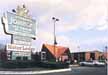
Following
in the trend of Restaurant renovations started in the
middle 1970s where earth tones, butcher block table
and counter tops, as well as octagonal salad bars replaced
traditional decor, the New Edition concept was an attempt
"to add a new dimension" to Howard Johnson's
restaurants. Woburn was converted in 1977 and was among
the first four prototypes. Tweaking the Orange Roofs
into New Editions was said to make them more upscale
and menus were revamped to include more fresh food items
with special emphasis on salads of all types. The Company
decided that all new Orange Roofs would be New Editions,
but soon backed off its position and the concept was
abandoned. |
|
| |
|
|
| |
|
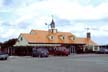
The
Howard Johnson's Today concept was supposed to reinvent
traditional Orange Roofed Restaurants. Somerset was
converted as the prototype and opened June 4, 1984.
The theme was "everything's new at Howard Johnson's."
The restaurant's Orange Roof became a drab and dull
gray and its diary bar was replaced with a take-out
counter. Menu items became a blend of traditional
fare and contemporary choices. Ironically even as
the Orange Roof, the best symbol of Howard Johnson's,
was eliminated, Simple Simon and the Pieman iconography
was reintroduced.
In
conjunction with the HJ Today & Deli•Baker•Ice
Cream Maker concepts, "cone-struc-tion"
was devised. First tested at Seekonk and the Orange
Roof at Medford, the innovative idea was introduced
at twenty locations in 1985. In each restaurant an
ice cream display case holding Howard Johnson's many
flavors of ice cream and "cone-diments"
such as candy bars, cookies, nuts, raisins, etc. could
be added together to create clever new taste concoctions.
Then the creation of ice cream and cone-diments was
added to a freshly made waffle cone resulting in the
cone-struc-tion!
|
|
| |
|
|
| |
| Deli•Baker• |
| Ice
Cream Maker |
|
|
|
|
| |
|
|
| |
|
Created
by Howard Johnson's Creative Concept Group, a twelve-member
team headed by Doris Etelson, Paddywhacks was designed
"to try out some new ideas and develop a different
type of menu and style of restaurant." The aim
was to create "an atmosphere for casual enjoyable
dining." The unit at Westfield was opened in June
of 1983 in a converted Orange Roof, and its hasty renovation
took place in only three weeks. The concept's name was
said to have been inspired by the children's song, Nick,
Nack, Paddy Whack. |
|
| |
|
|
| |
|
Another
of the Creative Concept Group's ideas, the first of
two Bumbershoots was opened in August of 1983 in the
converted Framingham Orange Roof. The concept placed
a heavy emphasis on liquor sales with the belief that
it would draw large crowds of young professionals. As
for food, the Company abandoned the commissary model
and announced that all menu items were to be fresh with
everything prepared on site from scratch. |
|
| |
|
|
| |
|
Burlington
was a converted Orange Roof which had been highly
touted when it first opened since it employed one
of the earliest A-frame Concept '65 derived plans
for its building. Made over into Pickle Lilys in the
spring of 1984, the decor and food was said to incorporate
elements from both the Paddywhacks and Bumbershoots
concepts. Named for a food item called piccalilli,
a relish of tomatoes, peppers, onions, celery, and
other ingredients created by Company research chef
Jacques Paimblanc, Pickle Lilys was said to create
a relaxed mood for dining with its fresh flowers and
bright colors.
Announced
in early 1985, Woburn was to be the second Pickle
Lilys. The unit had been constructed in the early
1970s in the Mansard-style as a traditional Orange
Roof and then was converted into the New Edition concept
in 1978.
|
|
| |
|
|
| |
| back
to top |
|
| rc |
Restaurants:
Red Coach Grill locations |
| |
| |
| Boston |
| -43
Stanhope St |
|
| |
| Braintree |
| -150
Granite St (Rts 128 & 37) |
|
| |
| Cambridge |
| -777
Memorial Dr |
|
| |
| Framingham |
| -1583
Worcester Pike |
|
| |
|
|
|
| |
| Norwood
|
| -Rt 1A |
|
| |
| Pembroke
|
| -166
Church St (Rt 139)A |
|
| |
| Saugus
|
| -Newburyport
TpkeA |
|
| |
| Wayland
|
| -55
Boston Post Rd (Rt 20)A |
|
| |
|
|
|
| |
| back
to top |
|
| r |
Restaurants:
Service Plazas & Gift Shops |
| |
|
| A |
| Massachusetts
|
| Turnpike |
| |
| EastboundA |
| |
| LeeA |
| Ludlow A |
| CharltonA |
| NatickA |
| |
| |
| WestboundA |
| |
| FraminghamA |
| WestboroA |
| CharltonA |
| LudlowA |
| BlanfordA |
| |
|
|
| A |
| Newbury
Turnpike |
| |
| Rowley
North |
| Rowley
SouthA |
| |
| |
| Fall
River Expressway |
| |
| Bridgewater
East |
| Bridgewater
WestA |
|
| |
| |
| U.S.
6 |
| |
| Barnstable |
|
| |
| |
|
|
| |
|
|
|
| back
to top |
|
| r |
Restaurants,
Ice Cream Parlors & Stands:
not adjacent to Motor Lodges
|
| |
|
|
| |
| Arlington |
| -473
Massachusetts AveA |
| |
|
|
| |
| Boston
(Kenmore
Square) |
| -645
Beacon St A |
| |
|
|
|
|
| |
| Boston |
| -795
Commonwealth AveA |
| |
|
|
| |
| Boston |
| -670
Huntington AveA |
| |
|
| |
| Boston |
| -870
Massachusetts AveA |
| |
|
|
|
|
|
| |
| Bourne |
| -Rt
28 Rotary @ Bourne BridgeA |
| |
|
| |
| Brockton |
| -North
Montello & HowardA |
| |
|
|
| |
| Brookline
(Cleveland
Circle) |
| -381
Chestnut Hill & Beacon A |
| |
|
| |
| Cambridge
(Harvard
Square) |
| -
Brattle @ BoylstonA |
| |
|
|
|
|
| |
| Cohasset |
| -Boarder
StreetA |
| |
|
| |
| Centerville |
| -Rt
28 & Camp Opechee RdA |
| |
|
|
| |
| Chicopee
(Fairview) |
| -Rotary
@ Memorial & JonesA |
| |
|
| |
| Dartmouth |
| -Kempton
StreetA |
| |
|
|
| |
| Dorchester |
| -612
Blue Hill AveA |
| |
|
|
| |
| East
Boston |
| -951
Bennington StA |
| |
|
| |
| Fall
River |
| -2345
Pleasant StA |
| |
|
| |
| Falmouth
Heights |
| -Main
StA |
| |
|
| |
| Forest
Hills |
| -131
Morton StA |
| |
|
| |
| Grafton |
| -Rt
140 Upton StA |
| |
|
|
|
|
| |
| Kenberma
Park |
| -Hull
MassA |
| |
|
|
|
| |
| Lynnfield |
| -Newbury
Turnpike & LocustA |
| |
|
| |
| Marshfield |
| -Ocean
& Surf StA |
| |
|
| |
| Medford
(Medford
Square) |
| -1-7
Salem St A |
| |
|
| |
| Medford (Wellington
Circle) |
| -590
Fellsworth A |
| |
|
| |
| Melrose |
| -Lynn
Fellsway EastA |
| |
|
|
| |
| Nahant |
| -Boulevard
& Wilson RdA |
| |
|
| |
| Nantasket |
| -121
Nantasket AveA |
| |
|
| |
| Needham |
| -Highland
& 1st AveA |
| |
|
| |
| Needham
Heights |
| -474
Reservoir StA |
| |
|
| |
| Newbury
(Byfield) |
| -I-95
& Central StA |
| |
|
| |
| Norfolk
Downs |
| -33
Billings RdA |
| |
|
|
|
| |
| North
Dartmouth |
| -247
State StA |
| |
|
|
|
| |
| North
Seekonk |
| -Central
AveA |
| |
|
| |
| North
Weymouth |
| -565
BridgeA |
| |
|
|
|
|
|
|
| |
| Procasset |
| -Monument
BeachA |
| |
|
|
| |
| Quincy
(Granite
Trust) |
| -1Chestnut
StA |
| |
|
| |
| Quincy |
| -521
Southern ArteryA |
| |
|
|
| |
| Revere |
| -Northgate
Shopping CenterA |
| |
|
| |
| Worcester |
| -481
Lincoln StA |
| |
|
| |
| Revere
Beach |
| -92
BoulevardA |
| |
|
|
| |
| Revere
Beach |
| -157
BoulevardA |
| |
|
|
| |
| Salisbury
Beach |
| -BroadwayA |
| |
|
|
|
|
|
|
| |
| South
Easton
|
| -Rt
138 & 106 (Algers
Corner)A |
| |
|
| |
| South
Weymouth |
| -500
WashingtonA |
| |
|
| |
| South
Yarmouth |
| -(FAI
era)1A |
| |
|
|
| |
| Sturbridge |
| -I-84&
Mashpoag RdA |
| |
|
| |
| Wakefield |
| -Lowell
@ Main StA |
| |
|
|
| |
| Waltham
(Wakefield) |
| -39
Main StA |
| |
|
| |
| Wareham
(Wellesley) |
| -92
Center StA |
| |
|
| |
| Westfield |
| -Southampton
& ArchA |
| |
|
| |
| Westport |
| -New
Bedford HwyA |
| |
|
| |
| Weston |
| -397
Boston Post RoadA |
| |
|
|
| |
| West
Boylston |
| -1380
West Boylston StreetA |
| |
|
|
| |
| West
Hatfield |
| -Rt
5 @ Rt 10A |
| |
|
|
|
| |
| West
Roxbury |
| -1779
Centre StA |
| |
|
|
| |
| West
Yarmouth |
| -Rt
28 @ Berry AveA |
| |
|
|
|
|
|
| |
| Wollaston
Beach |
| -775
Quincy Shore DrA |
| |
|
Please
note that the list of classic Motor
Lodges on this page is complete
and accurate. However it is not
possible with current resources
to include a "fully complete"
list of restaurant/stand locations
going back to 1925 for the Bay State.
|
|
|
|
|
| |
|
|
| back
to top |
|
|
|
|